Vector Databases Mastery: 2026 AI & RAG Developer Hub

Haricharan Kamireddy - AI Architect and Database Engineer
MCA graduate and MCTS-certified engineer with 7+ years of experience, currently specializing in AI architecture and database systems.
April 21, 2026  ·  Updated: May 3, 2026

⚡ Quick Answer (TL;DR)Vector databases are the essential memory engines for modern AI, storing complex unstructured data as high-dimensional embeddings. They enable developers to build fast, hallucination-free Retrieval-Augmented Generation (RAG) applications by instantly matching user queries with exact semantic context.

Core Enterprise Metrics for 2026:

  • Scale & Storage: Converts text, audio, and images into multi-dimensional vectors for dense data retrieval.
  • Performance Baseline: Achieves sub-10ms latency when optimized with HNSW or IVF database indexes.
  • Production Goal: Eliminates LLM hallucinations by enforcing strict, grounded enterprise data boundaries.

Let’s be real: before vector databases, trying to make an LLM understand a company’s internal PDFs or codebase was a nightmare of context limits and constant hallucinations. The breakthrough for me as a developer was realizing that a vector database doesn’t just store text—it stores meaning. It’s like giving your AI application a photographic memory. Instead of writing complex SQL queries hoping for an exact keyword match, you are simply asking the database, “find me concepts mathematically similar to this thought.” It completely changes how we build software.

Key Topics

  • Vector Embeddings: Learn how to transform text, images, and audio into high-dimensional data using the latest embedding models.
  • Semantic Search & Similarity: Move beyond traditional keyword matching by leveraging Approximate Nearest Neighbor (ANN) algorithms for lightning-fast retrieval.
  • RAG Architecture Pipelines: Step-by-step guides on connecting your database to frameworks like LangChain and LlamaIndex.
  • Tech Stack Comparisons: Real-world performance benchmarks for Pinecone, Qdrant, Milvus, Weaviate, and leading open-source alternatives.
  • Production Deployment: Best practices for managing index scaling, latency reduction, and database security in enterprise AI apps.

PGVector 2026: How to Build a High-Performance AI Vector Databases in PostgreSQL for Faster Semantic Search
Master pgvector Fast: PostgreSQL AI Vector Database 2026

PGVector extends PostgreSQL with a native vector column type and approximate nearest-neighbor indexes — HNSW and IVFFlat — letting you store, index, and query high-dimensional embeddings directly inside your existing Postgres instance without a separate vector database. In 2026, pairing pgvector 0.7+ with filtered HNSW indexes, quantized vectors, and partitioning by namespace delivers sub-10ms semantic search at tens-of-millions scale,
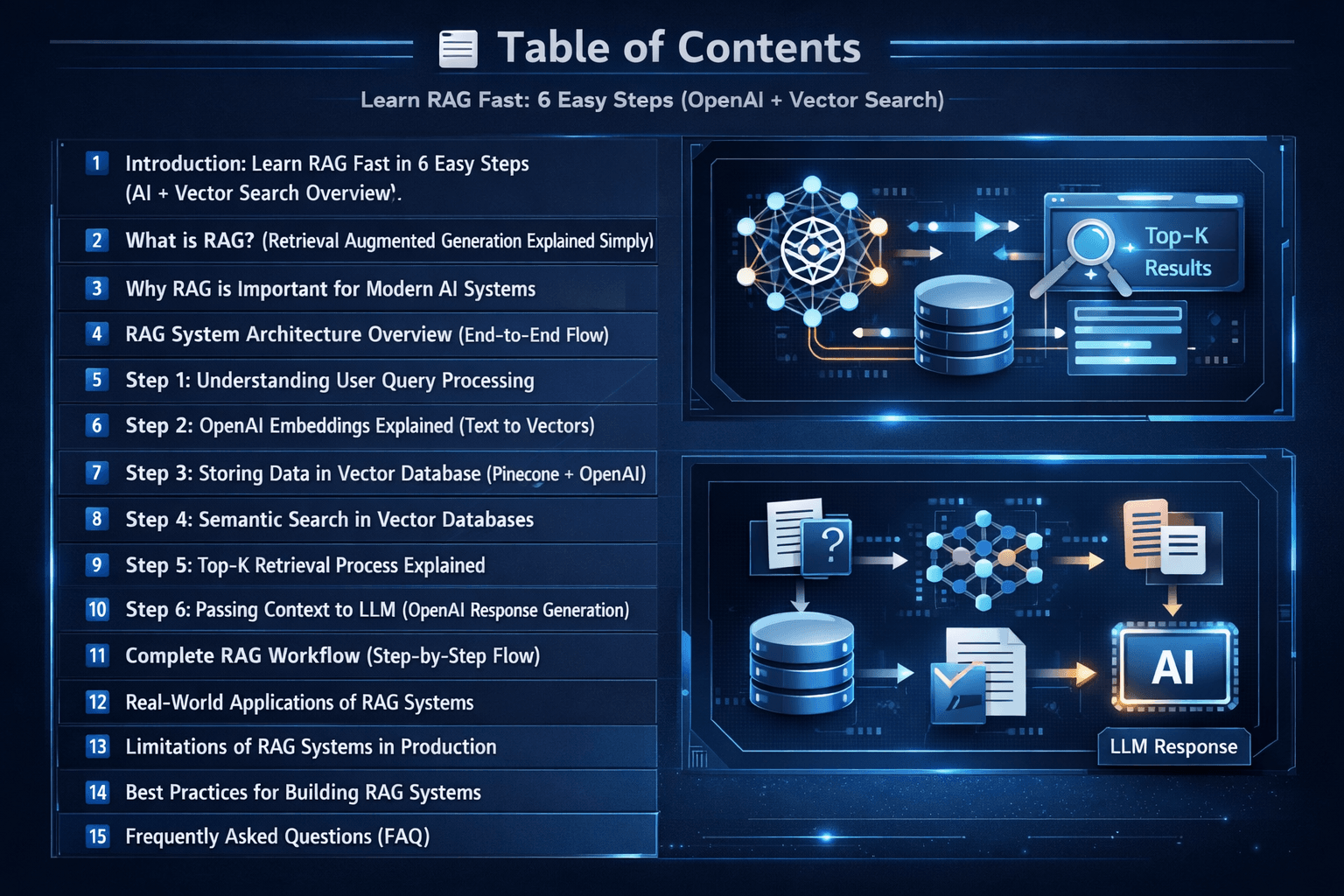
Learn RAG Fast: 6 Easy Steps (OpenAI + Vector Search)

Learn RAG Fast 6 Easy Steps (OpenAI + Vector Search)

📑 Table of Contents Introduction: Learn RAG Fast in 6 Easy Steps (AI + Vector Search Overview) What is RAG? (Retrieval Augmented Generation Explained Simply) Why RAG is Important for Modern AI Systems RAG System Architecture Overview (End-to-End Flow) Step 1: Understanding User Query Processing Step 2: OpenAI Embeddings Explained (Text to Vectors) Step 3:

Production RAG Pitfalls: How to Identify 7 Critical Failures & Fix Them With Python in 2026

7 Critical RAG Production Pitfalls (Python Fixes)

7 critical failures that silently break retrieval-augmented generation — with Python diagnostics to catch each one. 📑 Table of Contents Introduction: Why RAG System Fails (Production RAG Pitfalls) Why RAG Systems Give Wrong Answers in Production (RAG system fails in production) How Chunk Size Affects RAG Accuracy (best chunk size for RAG system) Embedding Problems

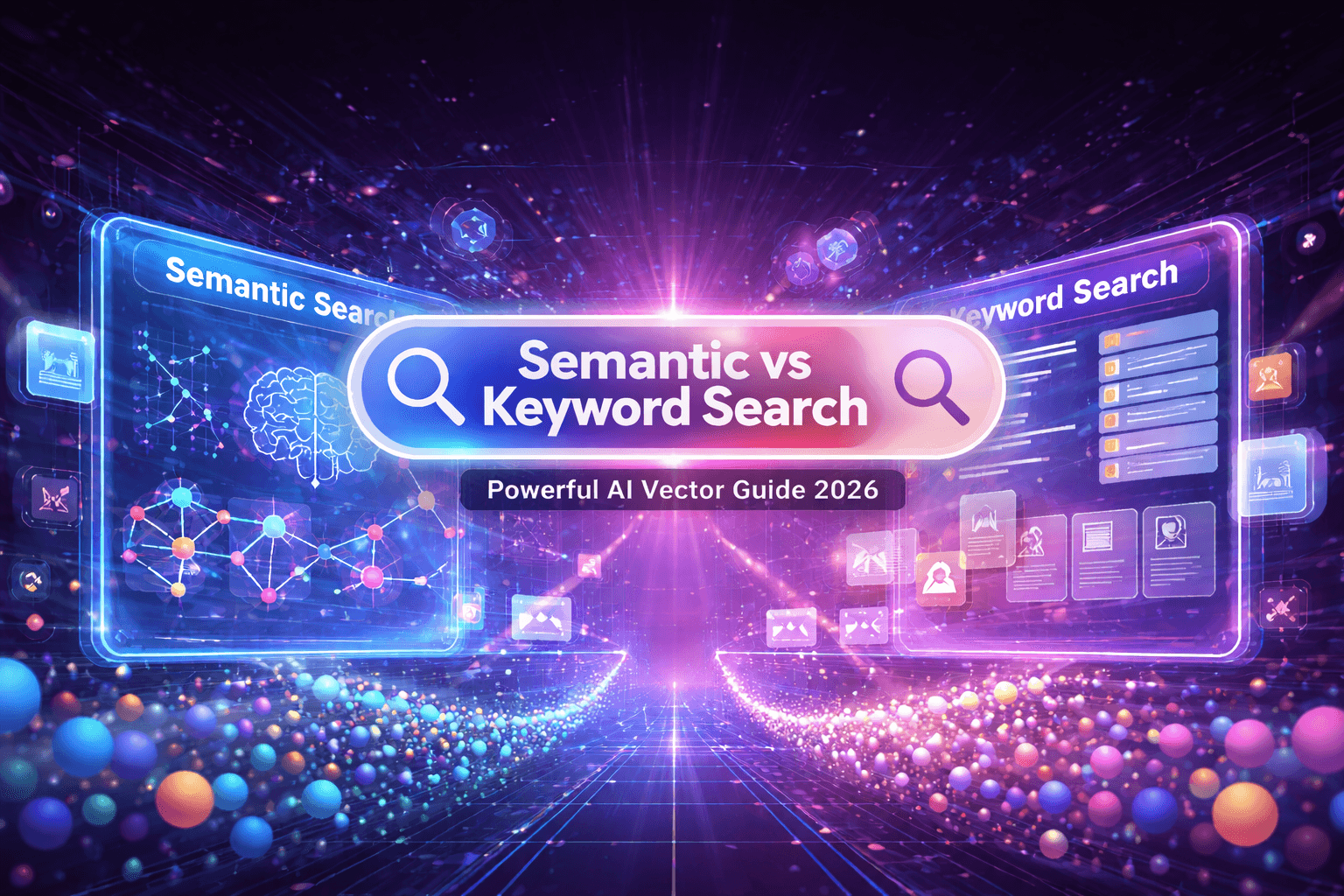
Semantic vs Keyword Search: Powerful AI Vector Guide 2026

embeddings in AI search

📑 Table of Contents Introduction: My Real Experience with AI Search Systems What is Semantic Search in AI Systems? Keyword Search vs Semantic Search (Core Difference) Vector Database AI Search Explained How Embeddings Work in AI Search Systems What is RAG System in AI? Why Vector Databases are Changing AI Search Real-World Use Cases of

Ultimate Semantic Search System with Pinecone + OpenAI (2026 Guide)

Build a Powerful Semantic Search Engine in 3 Steps (Pinecone + OpenAI)

📑 Table of Contents Introduction: Pinecone OpenAI Tutorial 2026 What is Semantic Search? (AI-Powered Search Explained) Why Pinecone for Vector Database and Embeddings Python Projects Connecting OpenAI API to Pinecone Vector Store Step 1: Setup Environment and Install Dependencies Step 2: Generate Embeddings Using OpenAI API Step 3: Create Pinecone Index and Store Vectors Complete

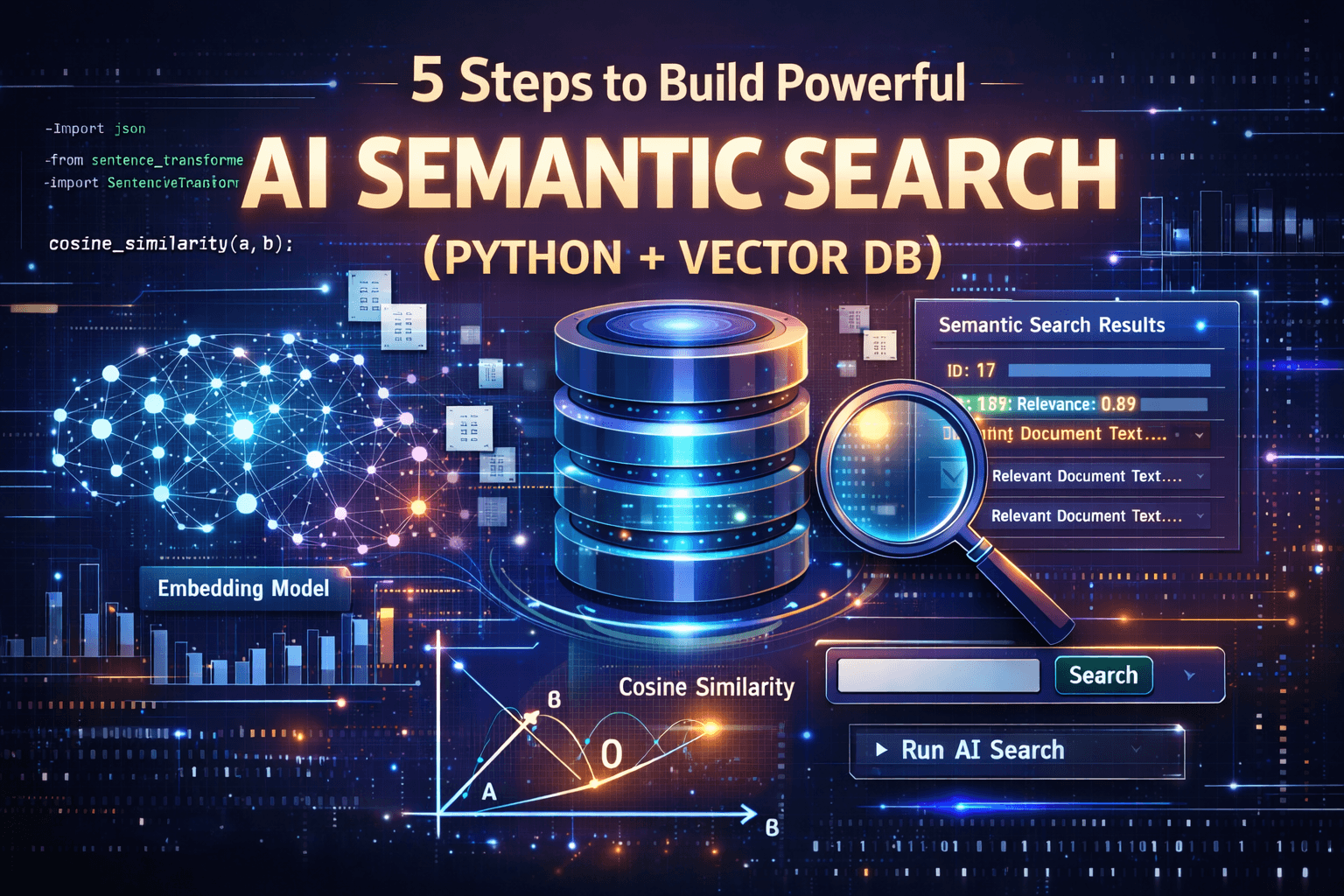
5 Steps to Build Powerful AI Semantic Search (Python + Vector DB)

5 Steps to Build Powerful AI Semantic Search (Python + Vector DB)

📑 Table of Contents Introduction What is Semantic Search and Why Vector Databases Matter Understanding Vector Database (Vector DB) and Embeddings How to Build Semantic Search with Python and Embeddings Using SentenceTransformer for Text Embeddings in Python Step 1: Requirement Packages Step 2: Code semantic search with python and embeddings Code Explanation: AI Semantic Search

Exciting Beginners Guide: Python Vector Database Embeddings 2026

Exciting Beginner’s Guide: Python Vector Database Embeddings 2026

📑 Table of Contents Introduction to Python Vector Databases and Embeddings Normal Database vs Vector Database What is a Vector Database and Why It Is in High Demand in 2026 Vector Database with AI: How Embeddings Power Modern Search Systems Example Dataset: Understanding Raw JSON Data for Embeddings Using SentenceTransformer for Python Embeddings Step-by-Step Vector

Vector Databases & Semantic Search FAQ

Q: What exactly is a vector database, and why is it essential for AI?

A vector database is a specialized storage engine that saves data as high-dimensional mathematical representations called embeddings, rather than plain text or rows.
It serves as the “long-term memory” for AI applications. Unlike traditional SQL databases that rely on exact keyword matches, vector databases use similarity search to find concepts that are mathematically related to a user’s query, making them the backbone of fast, context-aware RAG systems.

Q: How does “meaning” get stored in a database?

Meaning is captured through “Vector Embeddings,” which are long strings of numbers generated by machine learning models to represent the semantic essence of an object.
When you “embed” a piece of text or an image, the model places it in a high-dimensional space. Objects with similar meanings are placed closer together mathematically, allowing the database to retrieve relevant information even if the exact words don’t match.

Q: What is the difference between Semantic Search and traditional SQL search?

SQL search looks for specific character matches (e.g., “blue car”), whereas Semantic Search looks for the intent and concept (e.g., “azure vehicle”).
Traditional search fails if there isn’t a literal string match. Semantic search leverages Approximate Nearest Neighbor (ANN) algorithms to provide lightning-fast results based on the relationship between ideas, which is critical for handling unstructured data like PDFs.

Q: Which vector database should I choose for a production RAG pipeline?

The choice depends on your scale; pgvector is ideal for SQL-integrated stacks, while Pinecone and Qdrant are preferred for managed serverless needs.
For developers deep in the PostgreSQL ecosystem, pgvector 0.7+ is an excellent starting point. However, for enterprise-grade AI requiring massive scaling and sub-10ms latency, dedicated vector stores often provide superior performance benchmarks.

Q: How do vector databases help in reducing LLM hallucinations?

They provide “Grounding” by supplying the LLM with factual, retrieved context from your internal data before it generates a response.
Instead of letting an LLM guess, a vector database finds the exact relevant sections of your private documents. This context is fed into the prompt, forcing the AI to answer based on your specific facts rather than its training data.

Q: Is it difficult to scale vector indexes as my data grows?

Scaling is manageable using best practices like HNSW indexing algorithms, index sharding, and proper memory management.
As your data grows to millions of vectors, memory overhead becomes a factor. Production deployment requires monitoring for “semantic drift” and optimizing index configurations to ensure retrieval remains both fast and secure.

We use cookies for ads and analytics to improve your experience. Privacy Policy